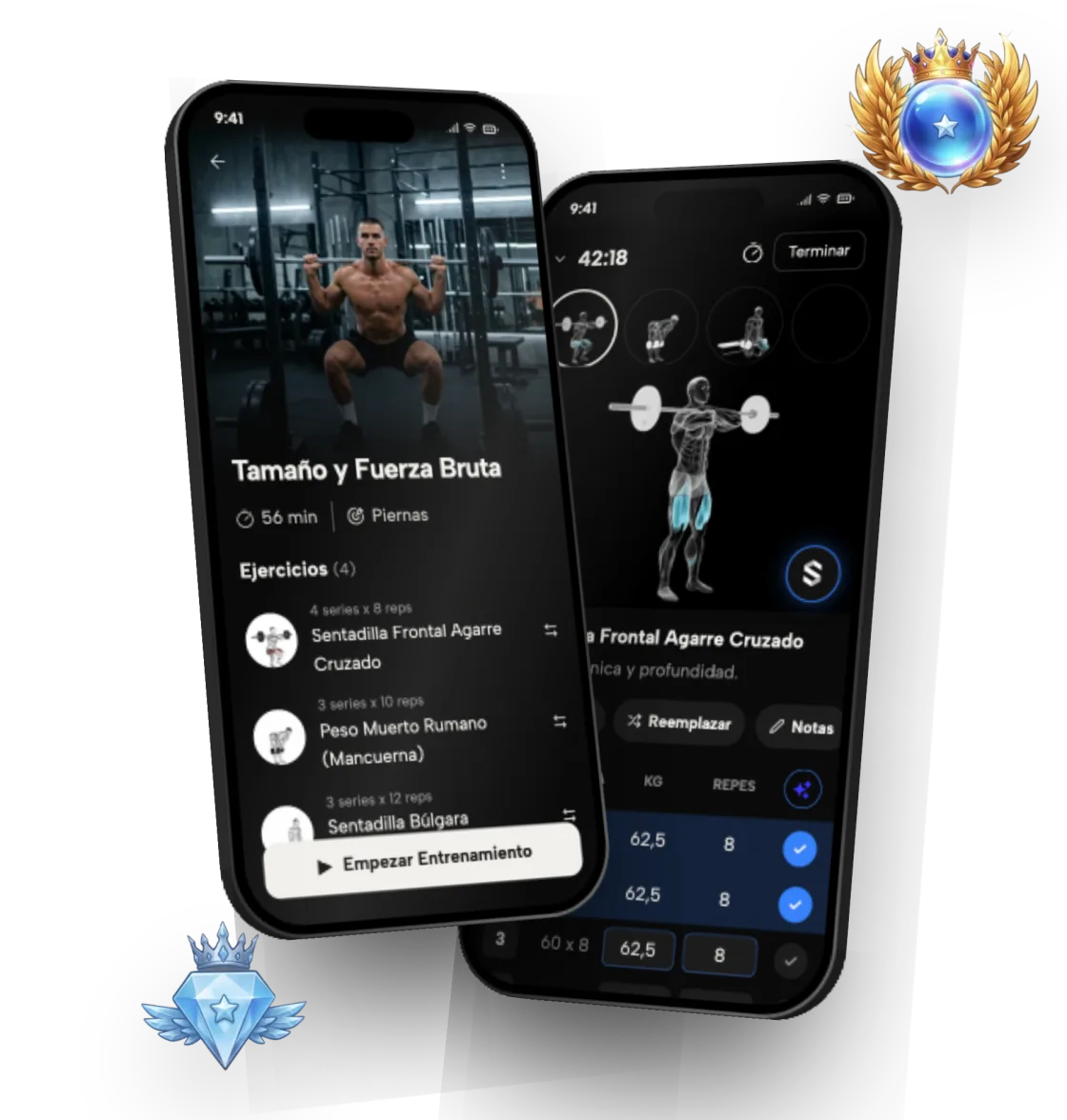
Hypertrophy app: science-based training to build muscle
Symmetry applies research-backed hypertrophy principles to help you build muscle effectively and sustainably, with a training plan that adjusts to you.
Symmetry teamUpdated 3 min read
On this page
What it takes to build muscle
Hypertrophy rests on three pillars: enough mechanical stimulus, consistent progression and adequate recovery. If one of them is missing, progress slows down.
Symmetry structures your training to cover all three. It manages weekly volume per muscle group, the intensity of each set and how often you train each muscle.
Volume and frequency
Hypertrophy research generally puts productive volume at around 10–20 sets per muscle group per week, spread over at least two sessions. Treat it as a guideline: beginners progress on less, and volume goes up over time.
The app counts your effective sets per muscle and spreads them across the week based on the days you train.
Intensity: close to failure, without overdoing it
For a set to drive growth, it has to be challenging. Symmetry's sets are programmed to take you close to muscular failure without compromising your recovery for the next session.
Exercise selection
Not every exercise is equally useful for a given muscle. Symmetry picks each one based on how much mechanical tension it creates in the target muscle, and every exercise comes with step-by-step technique instructions.
Who it's for
Beginners who want to start building muscle, and intermediates who want to get their volume and progression in order. If your goal is to gain muscle mass or improve your body composition, this approach is built for you.
And if you train at home, the app adapts the exercises to your equipment, such as dumbbells, resistance bands or bodyweight, while still managing your volume.
The principles Symmetry applies
- 01
Progressive overload
The demand goes up gradually, so the muscle keeps adapting.
- 02
Optimal volume
Effective sets per muscle group within the range that supports growth.
- 03
Evidence-based exercises
Each exercise is chosen for its ability to create mechanical tension in the target muscle.
- 04
Controlled proximity to failure
Hard sets that don't mortgage your recovery.
The exercises, step by step
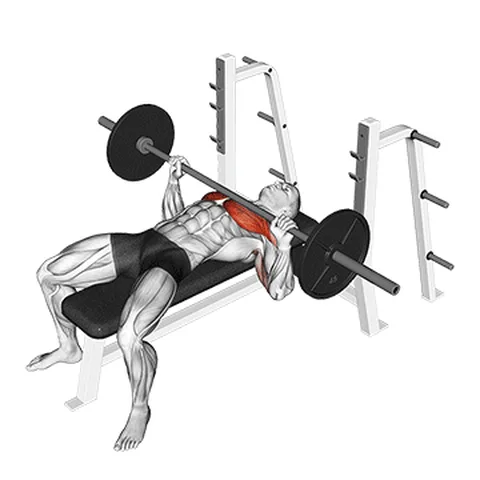 Flat barbell bench pressThe chest staple for adding load week after week.
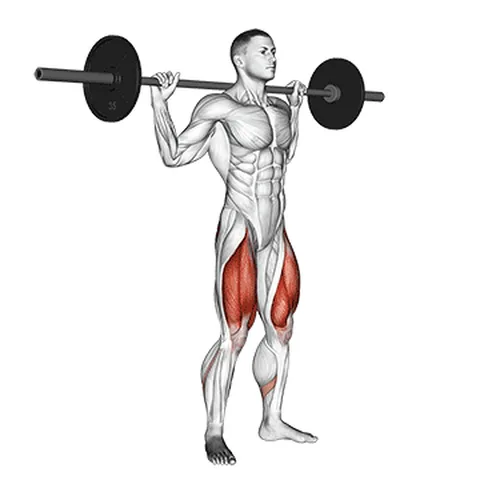 High bar squatQuads and glutes in a single compound lift.
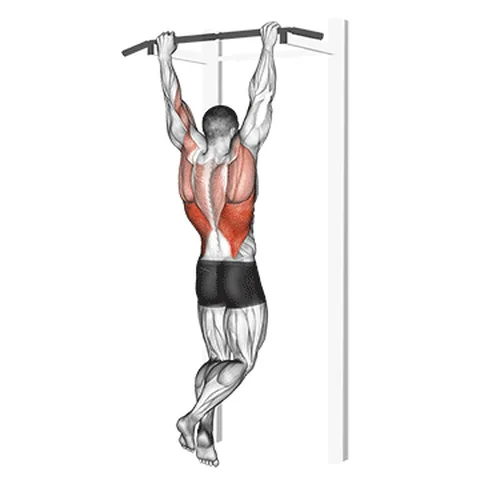 Pull-ups (pronated grip)Lats and upper back with your own bodyweight.
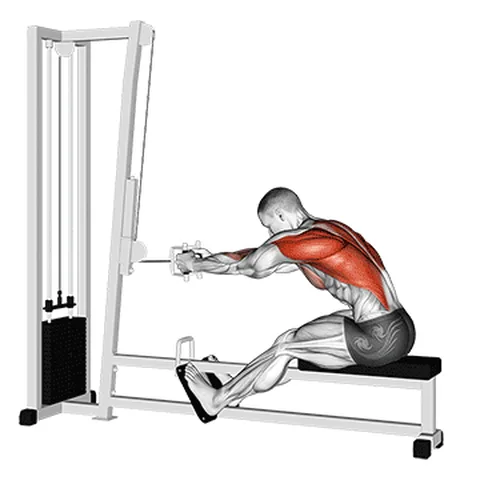 Seated cable rowBack volume with little lower-back fatigue.
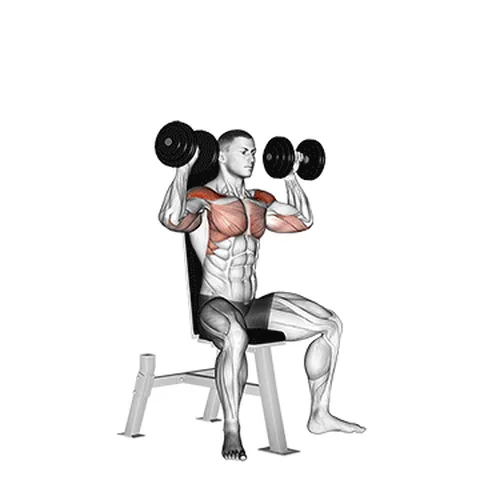 Seated dumbbell shoulder pressStrong, stable shoulders, one arm at a time.
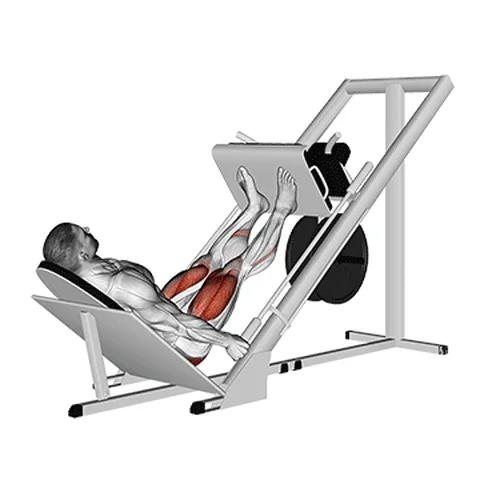 45-degree leg pressPlenty of leg work without loading your spine.
Technique, muscles and alternatives for each one in the exercise library.