
Flat bench press (barbell)
The barbell bench press is the upper-body push where you will move the most weight. It mainly trains the chest, helped by the front delts and triceps, which is why it usually opens chest day.
Updated November 7, 2026
On this page
Why do it
Because you can add load in small steps (5 lb at a time, sometimes less), it is one of the clearest ways to see that you are progressing. Do it early in the session while you are fresh: it is technical and suffers when you are tired.
Setup
- Lie with your eyes just under the bar and your feet planted, slightly behind your knees.
- Pull your shoulder blades together and down, as if tucking them into your back pockets. Hold that position for the whole set.
- Grip a little wider than your shoulders: with the bar on your chest, your forearms should be vertical.
How to do it
- 1
Lie flat on a bench with your feet flat on the ground and your back pressed against the bench.
- 2
Grasp the barbell with an overhand grip slightly wider than shoulder-width apart.
- 3
Lift the barbell off the rack and hold it directly above your chest with your arms fully extended.
- 4
Lower the barbell slowly towards your chest, keeping your elbows tucked in.
- 5
Pause for a moment when the barbell touches your chest.
- 6
Push the barbell back up to the starting position by extending your arms.
- 7
Repeat for the desired number of repetitions.
Technique cues
- Lower the bar to your lower chest, around the bottom of the sternum, not toward your neck.
- Keep your elbows about 45-60° from your body: not tucked in, not flared out to the sides.
- Press up and slightly back, so the bar finishes over your shoulders.
- Breathe in before you lower the bar and breathe out once you pass the hardest part of the press.
Muscles worked
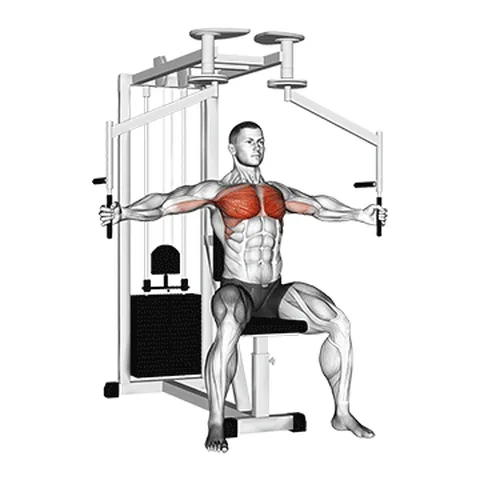
The pecs do most of the work, especially in the bottom half of the lift. The front delts help throughout, and the triceps take over near the top as your elbows straighten. If you stall close to lockout, your triceps are usually the weak link.
- Primary
- Chest
- Secondary
- Shoulders, Triceps
- Equipment
- Barbell, Flat bench
Common mistakes
1. Bouncing the bar off your chest
The bounce gives you weight you did not lift and takes tension off the chest where it works hardest. Lower under control and touch your chest without crashing into it.
2. Flaring your elbows out
With your elbows at 90° from your body, your shoulders take more load than they should. Tuck them slightly until the bar comes down to your lower chest.
3. Losing your shoulder-blade position
If your shoulders come off the bench as you press, your delts are doing the chest's job. Set your shoulder blades before every set and keep them set.
4. Lifting your glutes off the bench
A small arch in your lower back is normal; lifting your hips is not. Drive your feet into the floor but keep your glutes down.
Variations and alternatives
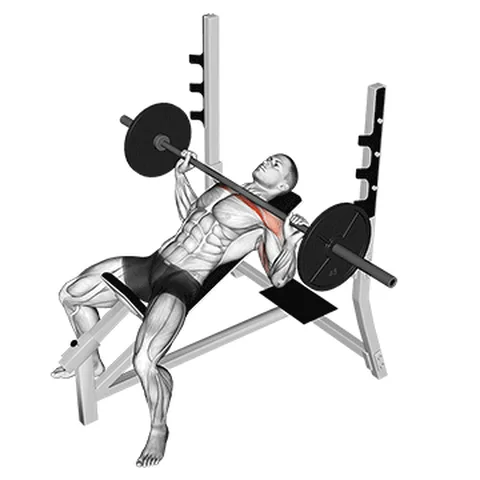
Incline barbell bench press
With the bench at 30-45°, the work shifts toward the upper chest and front delts. You will lift a bit less than on the flat bench.
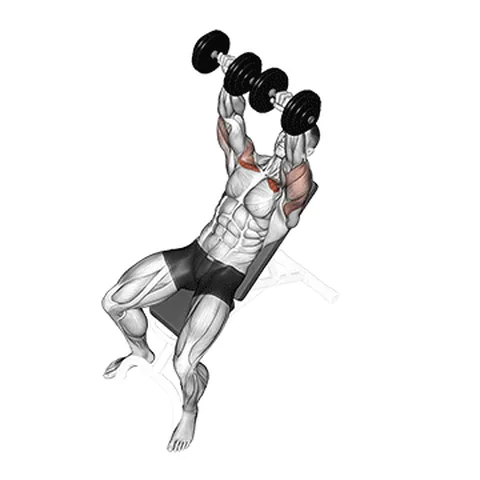
Incline dumbbell press
Each arm works on its own and the range of motion is slightly longer. Useful if one side pushes more than the other.
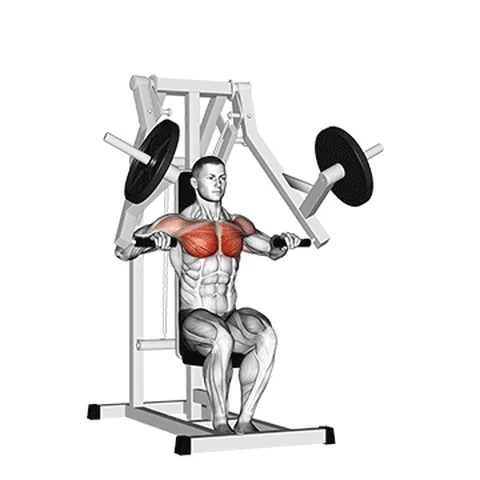
Machine chest press
The machine fixes the path, so you can train closer to failure without relying on technique or a spotter.
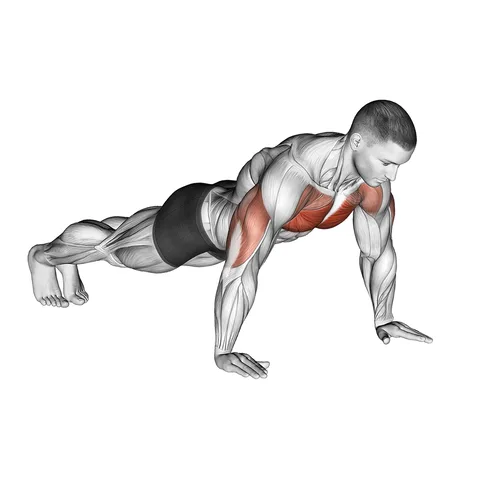
Push-ups
The same pushing pattern with no equipment. Good for beginners, or for extra volume at the end of a session.
Sets and reps
| Goal | Sets | Reps | Rest |
|---|---|---|---|
| Strength | 3-5 | 3-6 | 3-4 min |
| Muscle (hypertrophy) | 3-4 | 6-12 | 2-3 min |
| Beginners | 3 | 8-12 | 2 min |
Start with the empty bar to learn the movement and add weight once you complete every set with good form. One or two bench sessions a week are enough to progress; many people bench twice.
FAQ
How low should the bar go?
Until it touches your chest, around the lower sternum. If you cannot get there without shoulder discomfort, try a slightly narrower grip or switch to dumbbells.
Do I need a spotter?
If you are going close to failure with a barbell, yes, or use a rack with safety bars set at chest height. For sets well short of failure you do not need one.
Is barbell or dumbbell bench better?
Both work. The barbell lets you lift more and progress in smaller steps; dumbbells train each arm on its own with a longer range of motion. Many programs use both.
Alternatives
Related exercises
At a glance
- Primary
- Chest
- Secondary
- Shoulders, Triceps
- Equipment
- Barbell, Flat bench
- Steps
- 7

