Hypertrophy app: science-based training to build muscle
By Raúl MedinaUpdated 6 min read

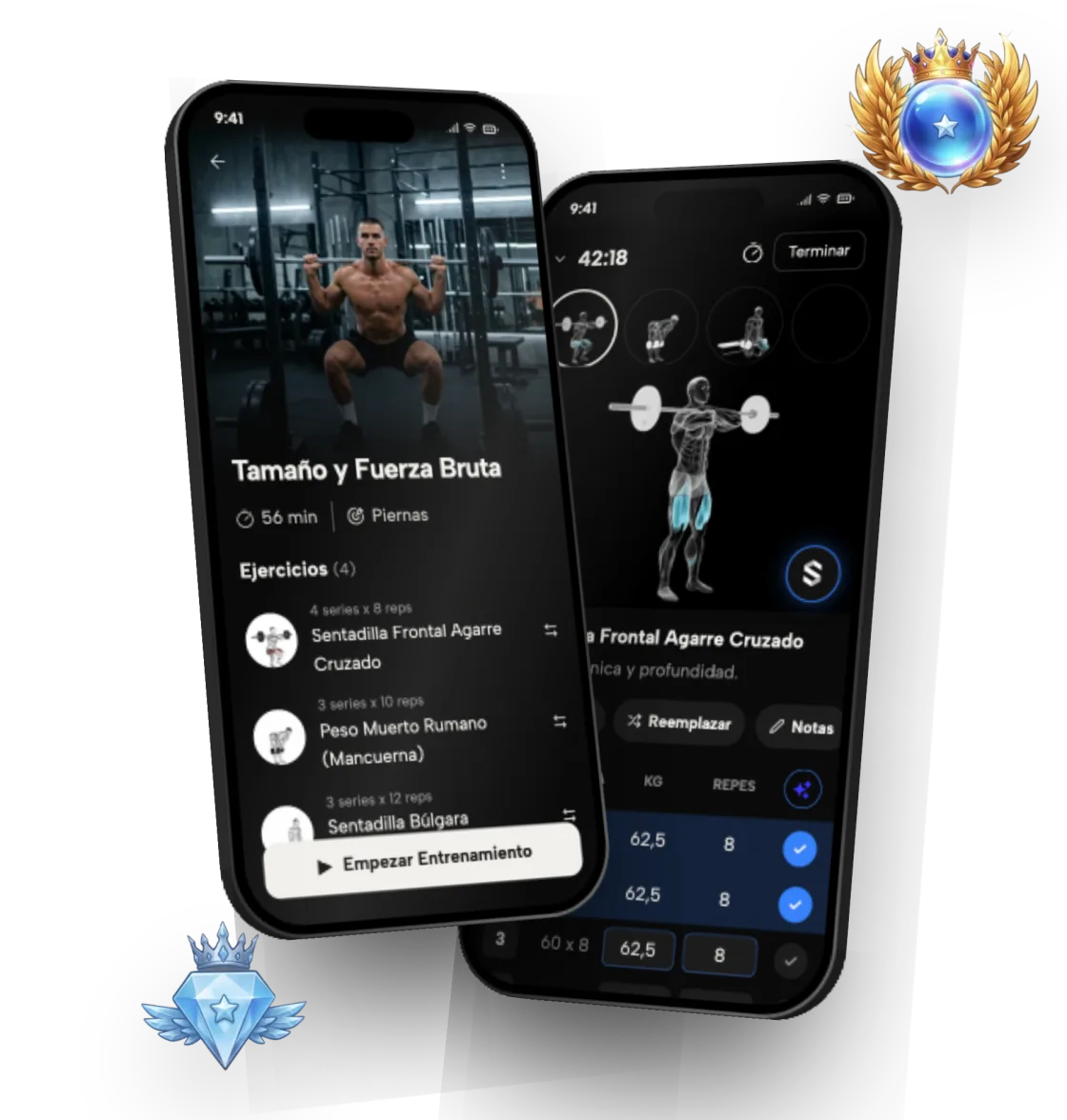
A hypertrophy app helps you build muscle if it does three things: gives you a plan with enough volume per muscle (roughly 10–20 hard sets a week), logs every set so you can progress, and shows you whether you are actually improving. Symmetry builds that plan around your level, schedule and equipment, then tracks your progress.
This guide covers what the research says it takes to build muscle, how to set up a hypertrophy week step by step, and what Symmetry does at each stage, including what's free and what's Pro.
Table of contents
- 1What does it take to build muscle?
- 2How many sets per muscle per week?
- 3What rep range is best for hypertrophy?
- 4Do you need to train to failure on every set?
- 5How do you build a hypertrophy program step by step?
- 6Which exercises are best for building muscle?
- 7How do you know if you are gaining muscle?
- 8How much do diet and rest matter?
- 9What's free and what's Pro in Symmetry?
- 10The principles Symmetry applies
- 11The exercises, step by step
What does it take to build muscle?
Three things at once: enough training stimulus, consistent progression and adequate recovery. If one is missing, progress stalls even when the other two are dialed in.
The stimulus comes from hard sets on exercises that load the muscle well. Progression means asking a bit more of your body over time: more weight, more reps or more sets. Recovery comes down to sleep, food and not piling on more volume than you can handle. That's why more volume isn't always better: if you show up more tired every week and your numbers drop, the problem is usually recovery, not effort.
Symmetry structures your training around those three levers. It manages weekly volume per muscle group, the intensity of each set and how often you train each muscle.
How many sets per muscle per week?
As a general guideline, 10 to 20 hard sets per muscle group per week, spread over at least two sessions. It's a range, not a magic number: beginners progress on less, and volume goes up over time.
How you spread that volume matters. Cramming 16 sets of chest into one day usually works worse than splitting them over two or three sessions, because the last sets of the day come with a lot of fatigue. That is why full-body, upper/lower and push/pull/legs splits are so common for hypertrophy: they let you hit each muscle twice a week.
The app counts your effective sets per muscle and spreads them across the week based on the days you train, so you can see if a muscle group is falling short.
What rep range is best for hypertrophy?
You can build muscle across a wide range, roughly 6 to 30 reps, as long as the set ends close to failure. What matters most isn't the exact number but that the last few reps are genuinely hard.
In practice, most programs use 6–12 reps on heavy compound lifts like the squat or bench press, and 10–20 on isolation work like curls or lateral raises. That keeps the load manageable and your form solid.
Do you need to train to failure on every set?
No. A set has to be challenging to drive growth, but you don't need to hit total failure every time. Stopping one to three reps short usually gives you nearly the same stimulus with less fatigue, especially on heavy lifts like the deadlift.
Symmetry's sets are programmed to take you close to failure without compromising your recovery for the next session. You can also log RPE (rate of perceived exertion) for each set, so you know how many reps you had left in the tank.
How do you build a hypertrophy program step by step?
If you want to build one yourself, or understand the one the app gives you, this order works for most people:
- 1. Decide how many days a week you can realistically train, not how many you wish you could.
- 2. Pick a split that lets you train each muscle twice: full body on 2–3 days, upper/lower on 4, push/pull/legs on 5–6.
- 3. Start each session with a compound lift per movement pattern (squat or leg press, press, row, pull-up or pulldown, hip hinge), then add isolation for the muscles you want to prioritize.
- 4. Set your volume: start at the low end of the 10–20 sets range and only add more if you are recovering well.
- 5. Log every set with weight, reps and effort.
- 6. Progress: once you hit the top of the rep range on all sets, add a little weight.
- 7. Every few weeks, review which muscles are moving and which aren't, and adjust.
Which exercises are best for building muscle?
Not every exercise is equally useful for a given muscle. The best hypertrophy exercises load the muscle through a good range of motion, are stable (you can push hard without fighting for balance) and let you add weight over time.
Symmetry picks each exercise based on how much mechanical tension it creates in the target muscle, and every exercise comes with step-by-step technique instructions. If you don't have a certain machine, the app offers an equivalent alternative.
How do you know if you are gaining muscle?
The most reliable sign is that, with the same form, you lift more weight or do more reps than a few weeks ago. The mirror and the scale change slowly and can mislead you; your numbers in the gym move first.
Symmetry shows you this three ways: strength charts per exercise, personal records detected automatically, and ranks. Ranks go from Iron to Symmetric (Iron, Bronze, Silver, Gold, Ruby, Emerald, Diamond, Champion and Symmetric) and are calculated per exercise, per muscle and overall, adjusted for your bodyweight. Watching your chest move from Silver to Gold is a clear signal the work is paying off.
If you want something more visual, you can log body measurements and progress photos and compare them side by side across dates.
How much do diet and rest matter?
Training sends the signal, but muscle is built outside the gym. A common evidence-based protein target is around 1.6 g per kilogram of bodyweight per day (about 0.7 g per pound), spread over several meals. Good sleep and eating enough overall matter too.
If you have a medical condition, an injury or questions about your diet, talk to a healthcare professional or a registered dietitian before changing it.
What's free and what's Pro in Symmetry?
On the free plan you can build a personalized routine, keep up to 4 routines, log your workouts and see your ranks, with no ads. Automatic progressive overload, where the app works out how much weight or how many reps to do next session, is a Symmetry Pro feature.
If you're coming from another app, you can import your history from Hevy, Strong or Liftoff so you don't start from zero.
The principles Symmetry applies
- 01
Progressive overload
The demand goes up gradually, so the muscle keeps adapting (automatic on Pro).
- 02
Optimal volume
Effective sets per muscle group within the range that supports growth.
- 03
Evidence-based exercises
Each exercise is chosen for its ability to create mechanical tension in the target muscle.
- 04
Controlled proximity to failure
Hard sets that don't mortgage your recovery, with RPE to measure effort.
The exercises, step by step
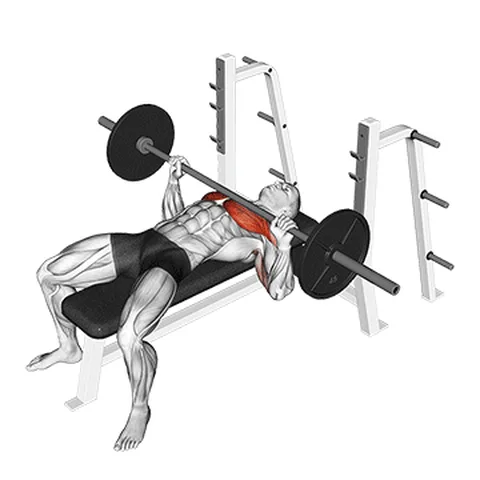 Flat barbell bench pressThe chest staple for adding load week after week.
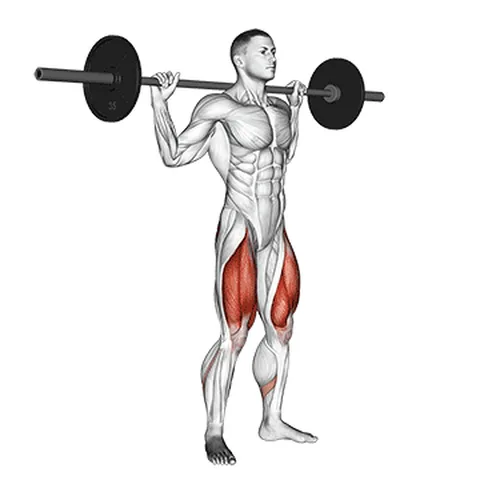 High bar squatQuads and glutes in a single compound lift.
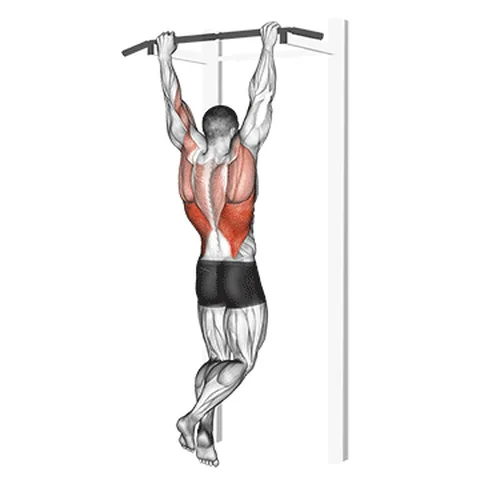 Pull-ups (pronated grip)Lats and upper back with your own bodyweight.
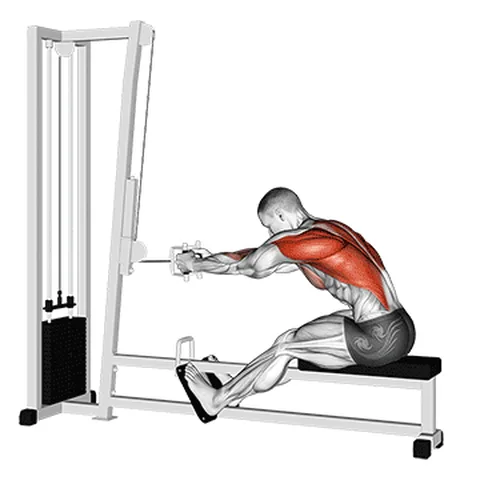 Seated cable rowBack volume with little lower-back fatigue.
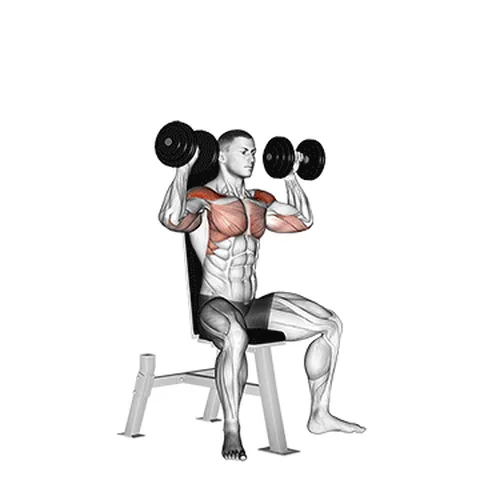 Seated dumbbell shoulder pressStrong, stable shoulders, one arm at a time.
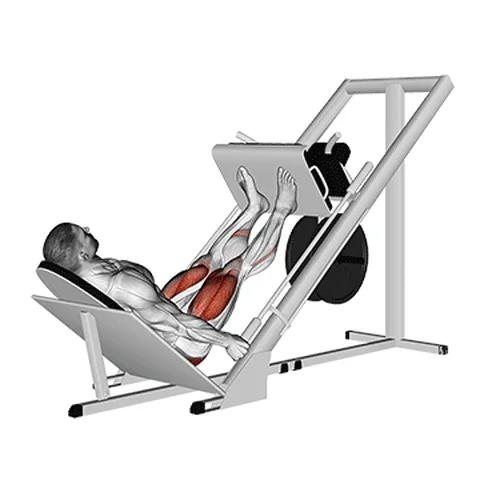 45-degree leg pressPlenty of leg work without loading your spine.
Technique, muscles and alternatives for each one in the exercise library.