From a small town in Spain to RevenueCat's New York App Week
By Alejandro Martínez MenesesUpdated 8 min read
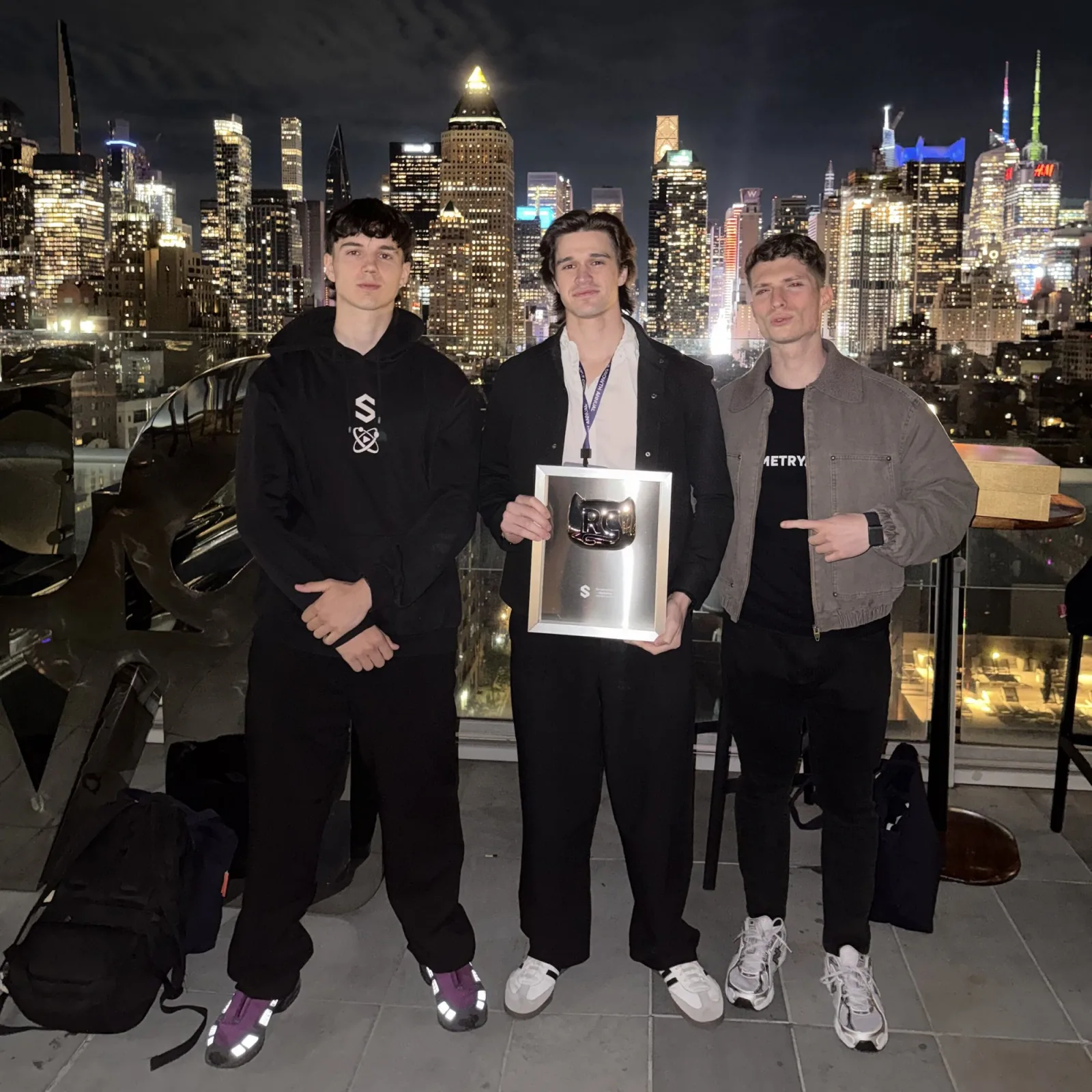
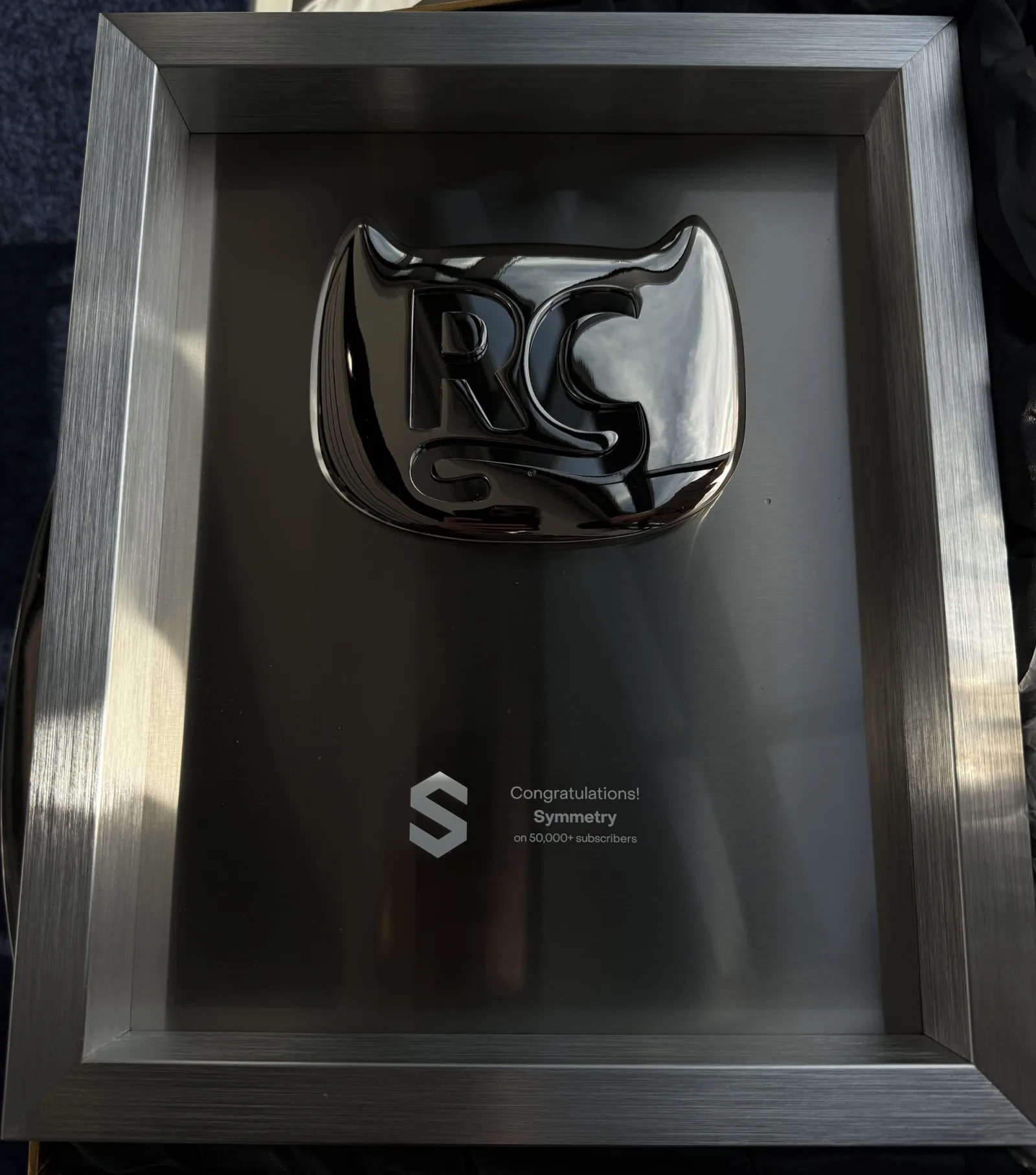
YouTubers who hit 100,000 subscribers get a Play Button: a silver plaque to hang on the wall. Apps have nothing like it. Or they didn't. In October 2026, RevenueCat gave Symmetry a plaque inspired by those YouTube awards for passing 50,000 paying subscribers, and Mauro Botanes, Diego Moreno and Miguel Ortiz picked it up in New York, in the middle of New York App Week, just over a year after launching the app.
Table of contents
A rooftop in New York
Mauro, Diego and Miguel. Three friends from Spain with a self-belief that, from the outside, looked borderline irrational. Three guys who have spent years working like there's no tomorrow. In October 2026 they were on a New York rooftop, Manhattan lit up behind them and a silver plaque in their hands that reads: "Congratulations! Symmetry on 50,000+ subscribers."
The Play Button wasn't just any metaphor for them. Before Symmetry, all three already knew what growing on YouTube feels like: Miguel built more than 350,000 subscribers on his channel, Mauro more than 50,000 as Toñete and Diego more than 20,000 on his, where he documented the day-to-day of building the company. Today all three channels are on pause: every hour goes to Symmetry. This time the plaque wasn't for a channel. It was for the app.
It was a week of firsts. Mauro's first time in a helicopter, flying over Manhattan. The first time the three of them walked into an event full of founders, product managers and user acquisition leads from the biggest subscription apps in the world. And the first time a gym app born in a student room came home with a physical award, something a digital product almost never gets.
They weren't there to sightsee. They were there because Symmetry is crushing it.
And it wasn't just anywhere. From October 19 to 22, RevenueCat turned New York into the world capital of subscription apps with New York App Week: more than 40 events in four days, the Shippies awards gala aboard the Intrepid Museum's aircraft carrier, and App Growth Annual, its flagship conference, with 400+ people at The Glasshouse and 5,000+ watching online. Apps like Runna, Fitbod and Suno, this year's Shippies winners, were there. And so was Symmetry, with its plaque.
Show them this photo three years ago and they wouldn't have believed it. To understand why, you have to start from the bottom. But first, here's how Mauro told it on X a few days later:

Last week I attended the @NewYorkAppWeek hosted by @RevenueCat and it was wild. First time flying in a heli!
Also, Symmetry took home a very cool prize
Above all, the best part was the amazing people I met: founders, PMs, UA managers...
Meeting veeery cool people like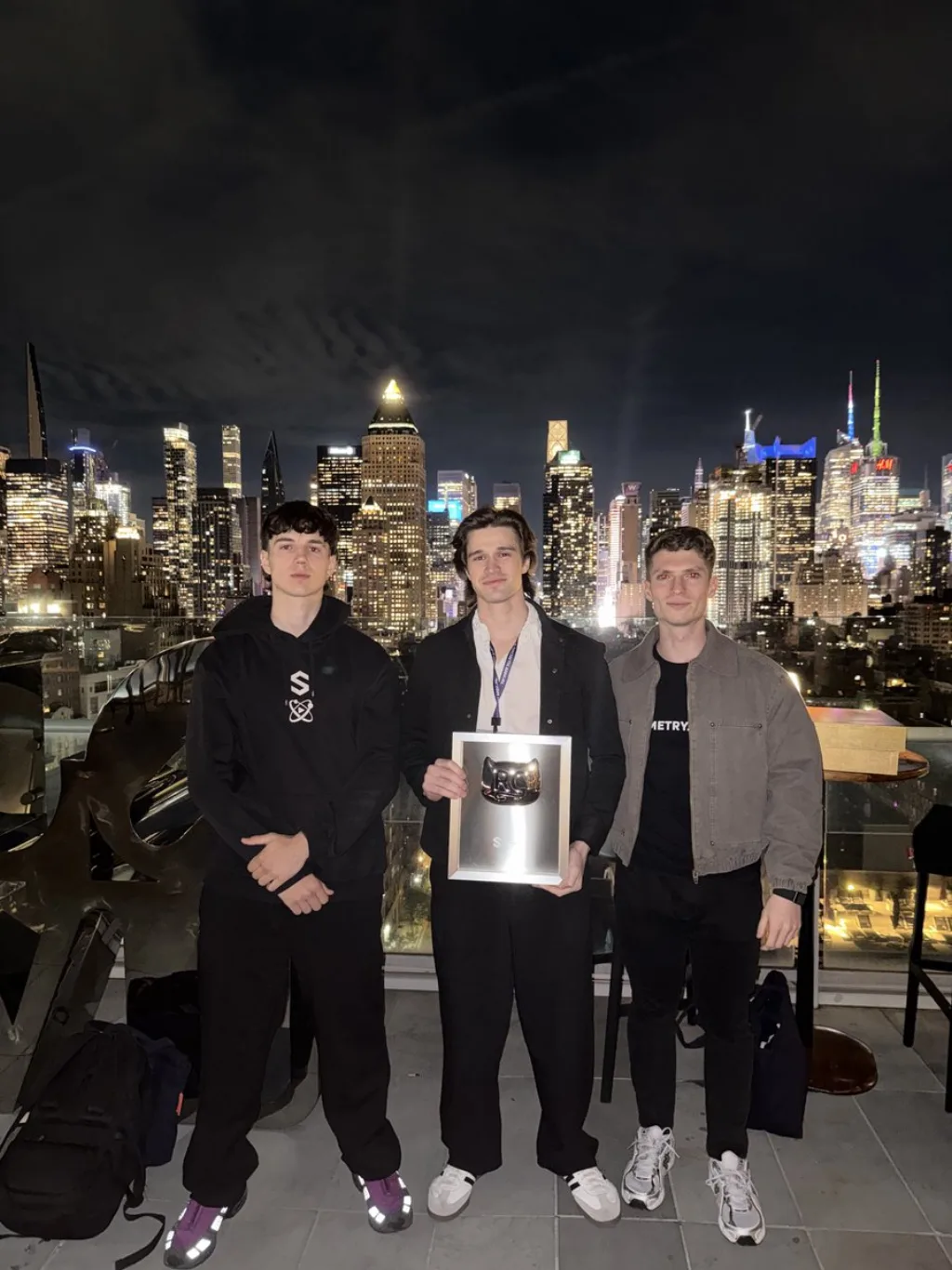
Three kids who weren't headed anywhere
Symmetry comes from three kids who, as teenagers, weren't headed for any of this. They spent their childhood playing Minecraft and their teens going from one neighborhood party to the next. A normal life, with very normal problems.
Mauro, now the co-founder of a gym app, had been diagnosed with obesity. Miguel had failed a whole school year after a breakup. And Diego was about to get kicked out of high school for causing too much trouble. None of them fit the idea of someone who ends up starting a company, let alone one about training and getting better.
Almost by accident they found personal development: the gym, books, studying for real. It changed their lives. By 2023 they were studying math and computer engineering in the Netherlands. There, between laughs, philosophical talks that ran late into the night and countless hours of work, came the question that started it all: if getting better is this simple, why isn't it normal?
That question became the vision we still have today: make improvement the norm. The full story, in their own words, is on our About us page.
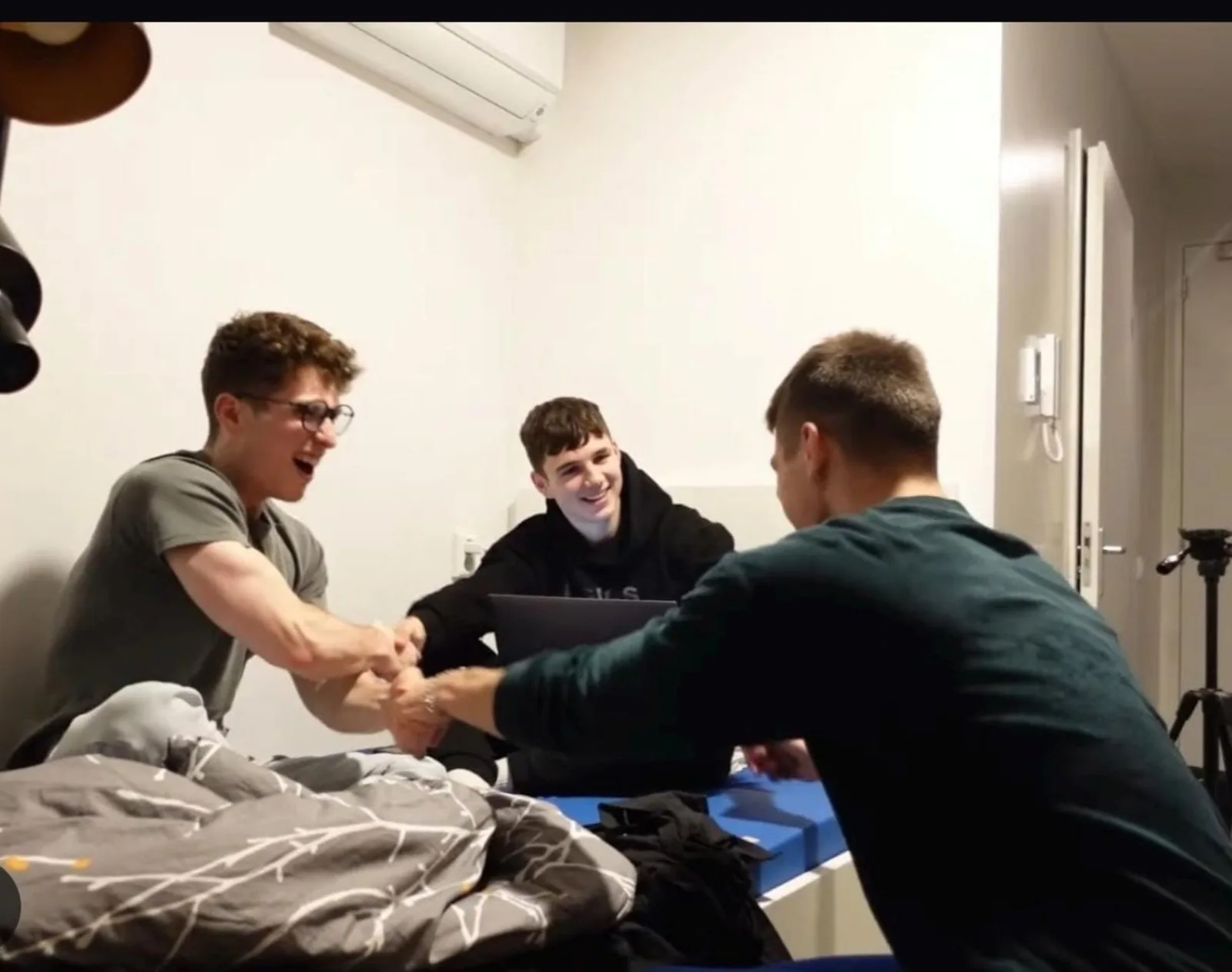
When everything went wrong
They founded Symmetry in 2024 and the first version went wrong. They hired developers, it didn't work, and it took them one to two years to have something worth launching. Months of work in the trash and an idea that, from the outside, looked like it was going nowhere.
Anyone else would have thrown in the towel. They didn't.
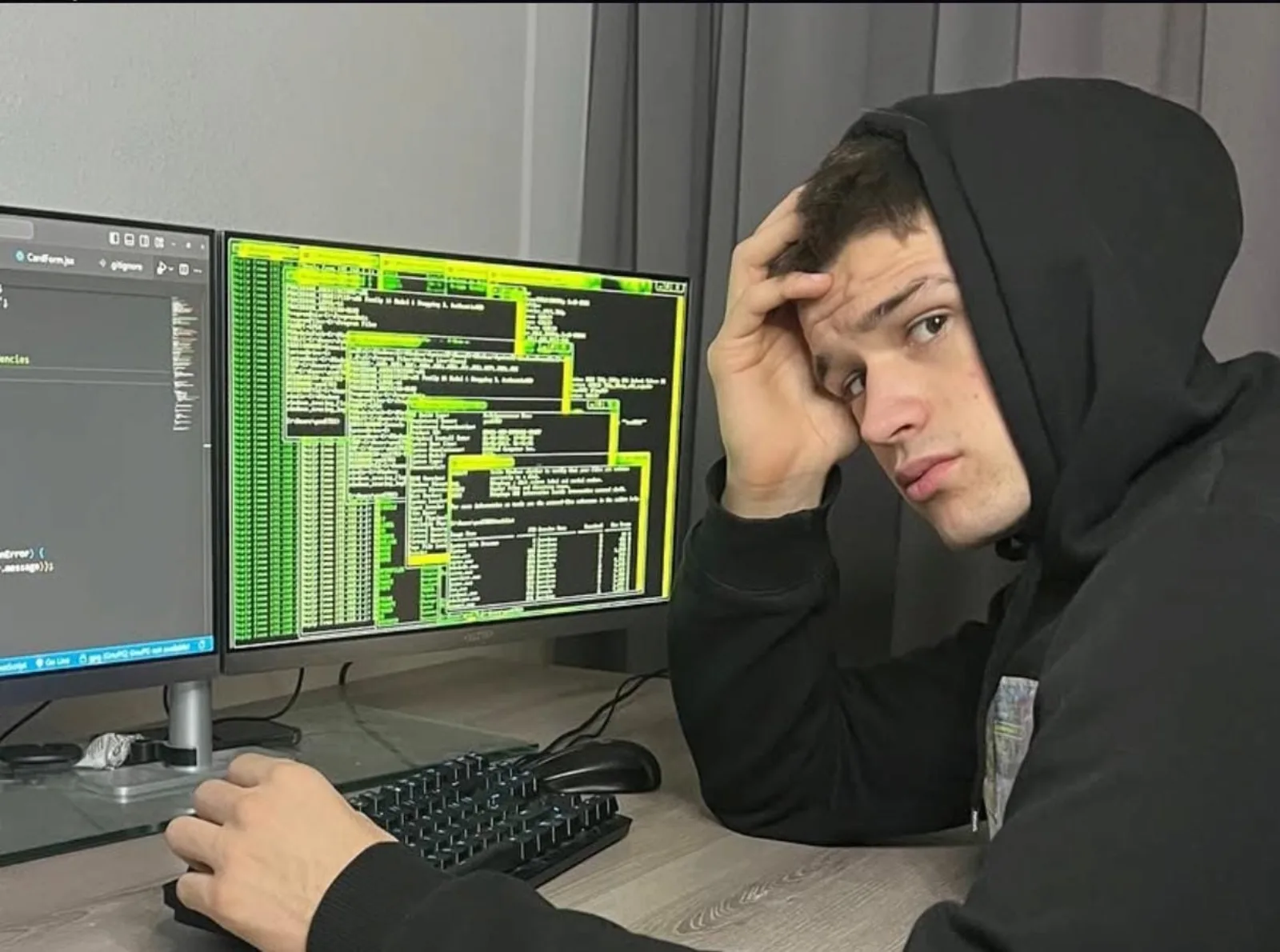
June 6, 2025: the app goes live
On June 6, 2025, the app finally launched. It wasn't perfect, but it was ours, and it already did what they would have needed at fifteen: tell you what to train.
You answered a few questions about your experience, your goal, the days you could train and the equipment you had, and Symmetry gave you a complete workout plan, with exercises, sets, reps and weights. You logged every set and the app told you how much to add next time. No spreadsheets, no guessing, no walking into the gym without knowing what to do.
January 2026: liftoff
January 2026 was when everything changed. We found the way to tell the Symmetry story on TikTok, with content creators all over the world, and the app started growing like never before.
But content only brings people in. What makes them stay is that inside Symmetry you never train alone. Your sets, your PRs and your streak land in your friends' feed the second you finish, and they send you respects. A "beast, 90 next week" from a friend after a PR pushes harder than any motivational quote. That's how Symmetry started spreading from one friend to the next.
An AI that knows you
This is the heart of it all. It took Mauro, Diego and Miguel years to learn how to train: books, videos, trial and error. A personal trainer who really knows you is expensive, and almost nobody can afford one. Symmetry's idea was always the same: put in anyone's pocket what took them years to figure out.
That's why Symmetry is an AI gym app today. Its AI is called Symmetry Intelligence, and it knows every set you've logged.
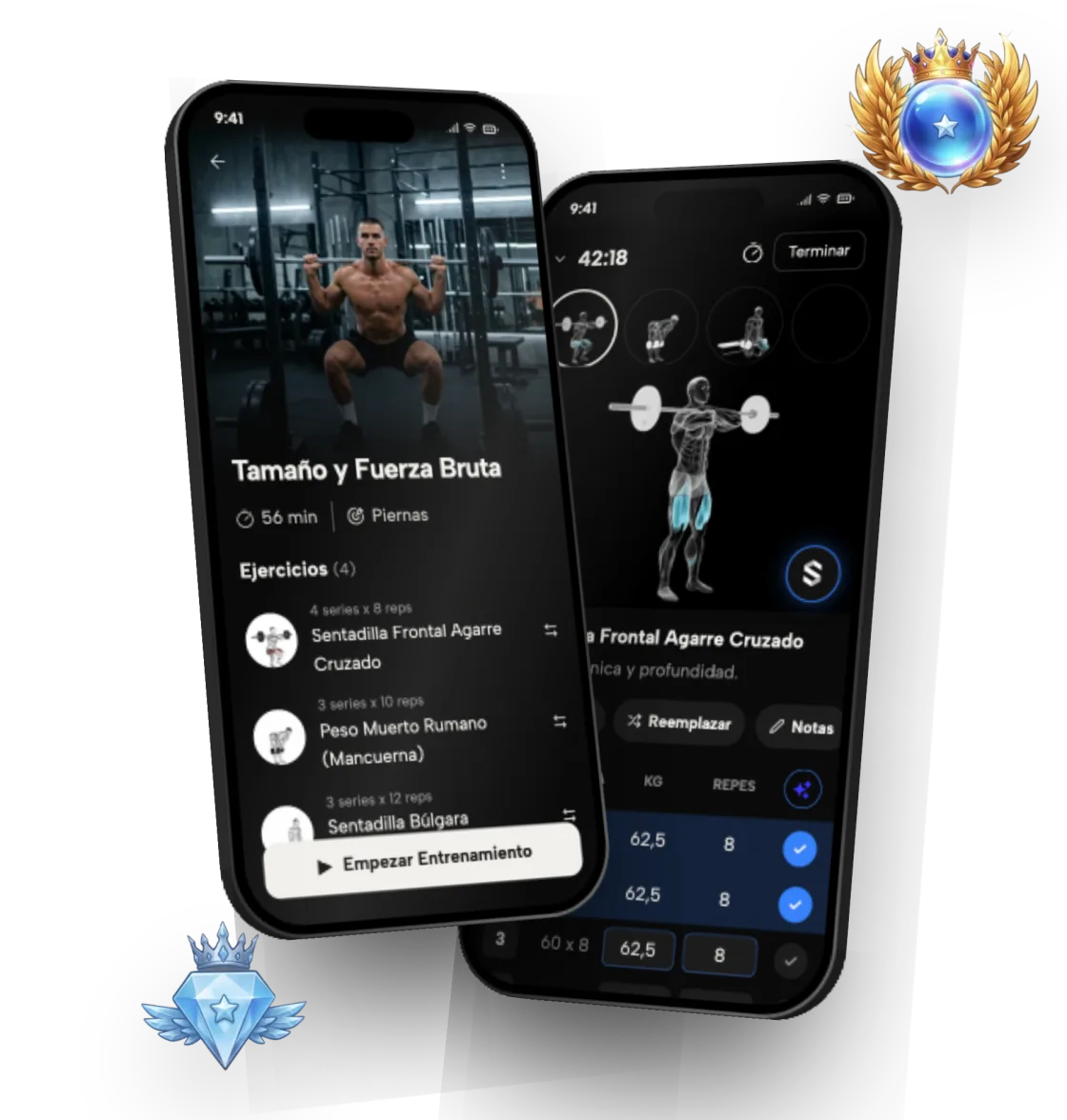
You ask about your training the way you'd ask your coach, and it answers with your data: your last session, your volume, your PRs. Not generic tips copied from the internet. Ask what your last workout was and it tells you that you took the front squat to 62.5 kg on all four sets, 2.5 kg more than last week, and suggests trying 65 next time.
And the more you train, the more it knows you. Your plan adapts to how you perform. Progressive overload runs on its own: the app tells you the weight and reps for every set so you keep progressing.
Right now the team is building the next generation of Symmetry Intelligence. The goal is for training with Symmetry to feel like having the best coach in the world watching every rep. Except this one never gets tired, never bills by the hour and remembers everything.
All the credit is theirs
Before any numbers, something needs saying: the credit for this belongs to Mauro, Diego and Miguel. For the fight they put up when nothing was working. For every stumble, every month when it would have been easier to quit and go back to a normal life. And above all, for the team they built around an idea that, at first, only they believed in.
The numbers that follow are the result of all that. But they are not the finish line: the real fight has just begun, and we are ready for it.
Symmetry went from zero to more than 3.5 million downloads in about 16 months after launch:
| Date | Milestone |
|---|---|
| 2023 | The idea is born in the Netherlands |
| 2024 | Symmetry is founded |
| June 6, 2025 | The app officially launches |
| January 2026 | Creator content on TikTok takes off |
| May 2026 | 1.8M downloads, 1M+ active users and 4.9M completed workouts |
| September 2026 | 3M downloads |
| October 2026 | 3.5M+ downloads and the RevenueCat plaque for 50,000+ subscribers at New York App Week |
50,000 subscribers
A subscriber is someone who pays for Symmetry Pro, the paid version of the app. The download and the basics are free. That's why this is the number we care about most: nobody pays for an app that doesn't help them.
RevenueCat's plaque matters because it comes from the company that sees the real numbers behind subscription apps. RevenueCat is the platform mobile apps use to run their purchases and subscriptions on iOS and Android, and it processes every Symmetry subscription. So the 50,000 isn't our estimate: it comes from their system.
And very few apps ever reach it. According to RevenueCat's State of Subscription Apps 2026, built on data from 115,000+ apps, only 17.3% of new apps hit $1K in monthly revenue within two years, and only 4.6% hit $10K. Symmetry went from zero to more than 50,000 subscribers in just over 16 months.
Behind that number are 50,000 people who decided, one day, to take getting better seriously. Make improvement the norm, turned into a number.
A passion that spreads
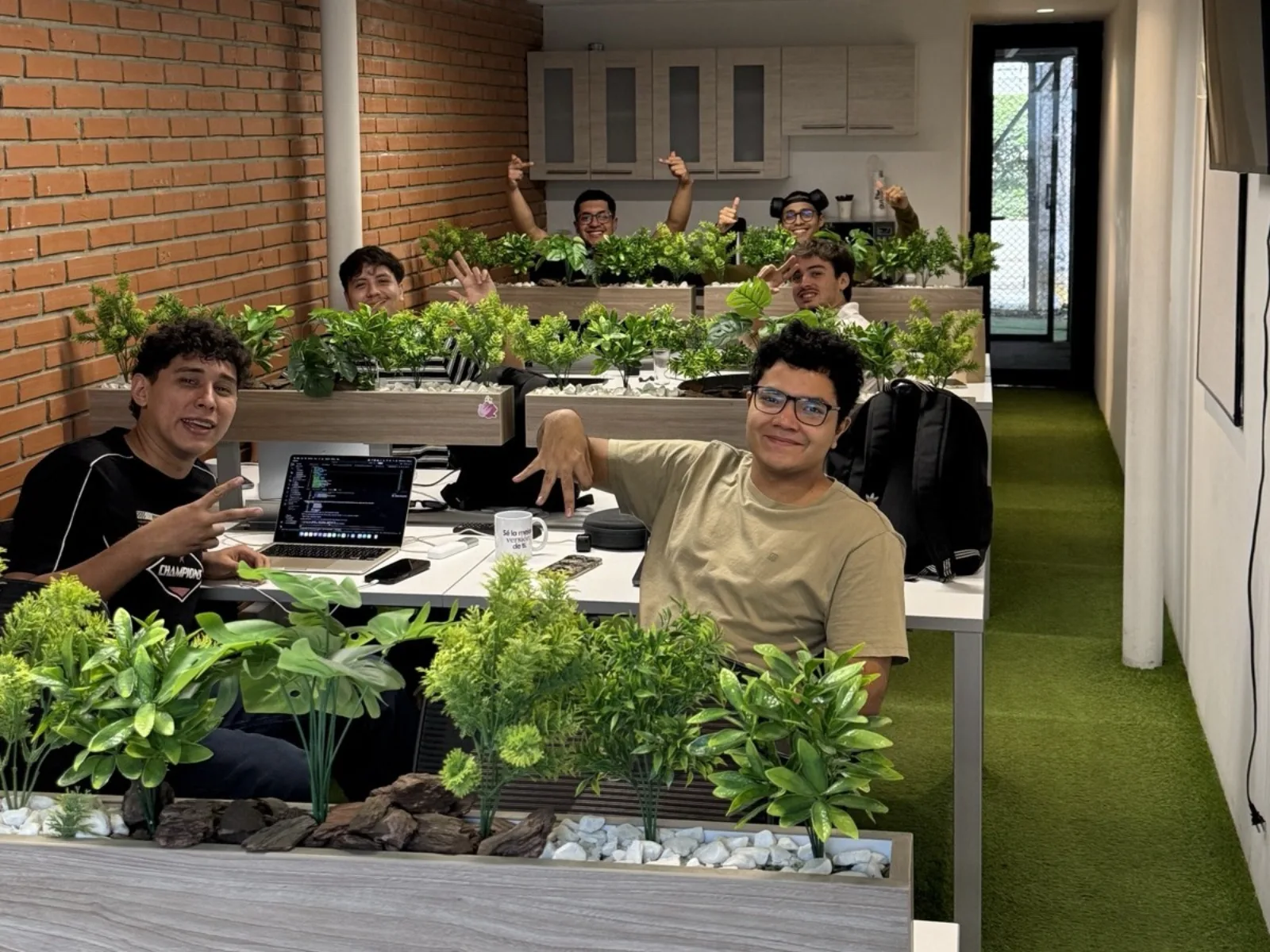
What's admirable isn't just what the three of them built. It's that the way they live this is contagious. Behind the idea there's now a whole team, with more than 60 content creators, working with the same intensity and pushing every day to make Symmetry the #1 app in the world.
We're spread across the world, between Spain, Latin America and wherever the week takes us. But it feels like we're sitting right next to each other. In June we flew the team to Medellín to see each other face to face and work side by side, and it proved distance doesn't change a thing.
I see it firsthand. My job as Head of Recruiting is finding the people who join this madness, and almost all of them show up with the same question the founders had in 2023: why not?
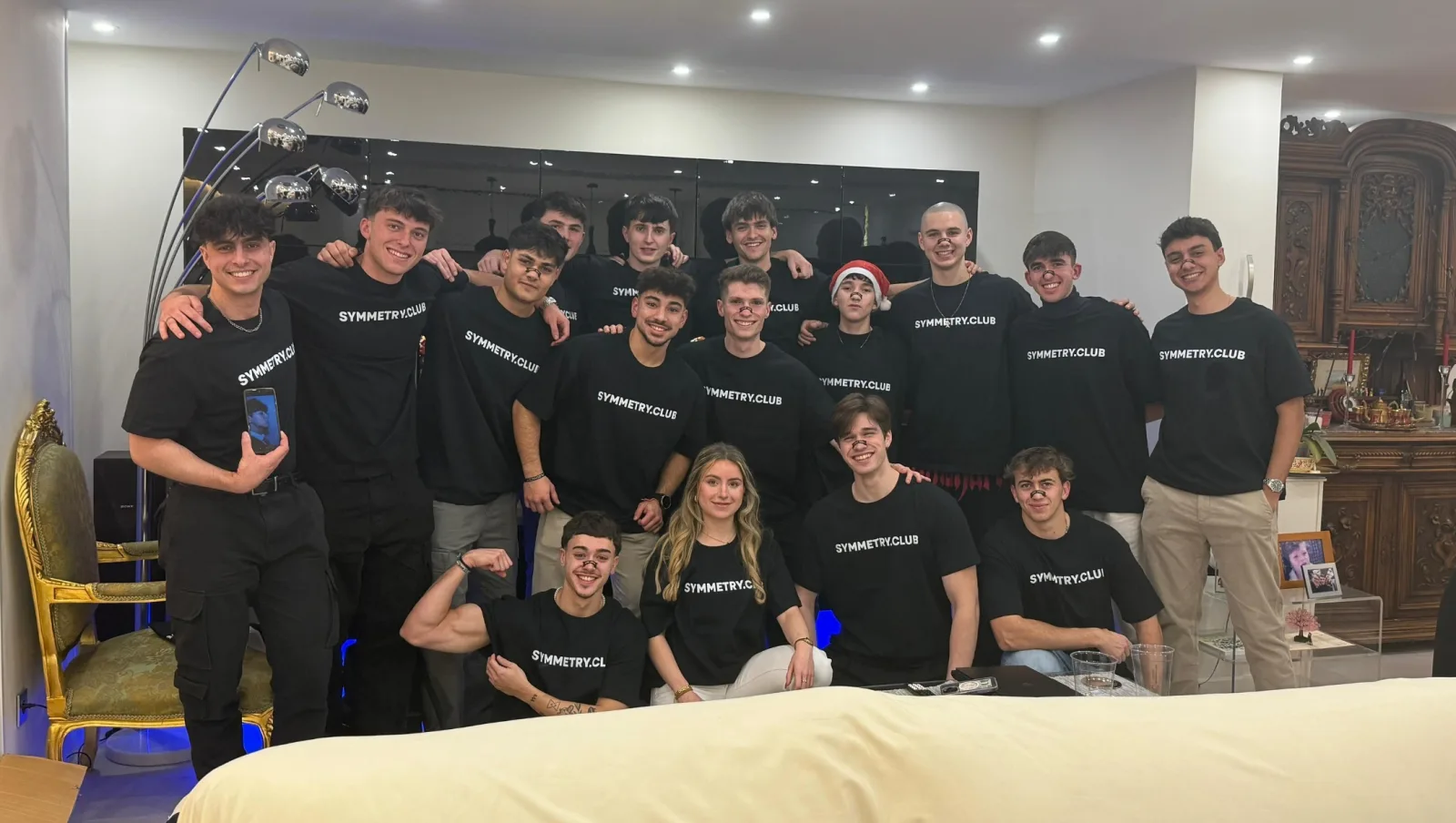
What's left
The truth is, we haven't made it yet.
There's a long road ahead. The goal is the same one from that student room: make getting better normal, first in the gym and then everywhere else. An AI that knows you better every day and a community that never lets you train alone.
But one thing is true today, and it isn't changing: we're not stopping.
If you haven't tried it yet, Symmetry is free on iOS and Android. Build your workout plan or read the full story on our About us page.
Symmetry to the moon.